

Feb 5th 2026
Earth, Steel, and Stone: Swapping Busy for Balance this February
Earth, Steel, and Stone: Swapping Busy for Balance this February
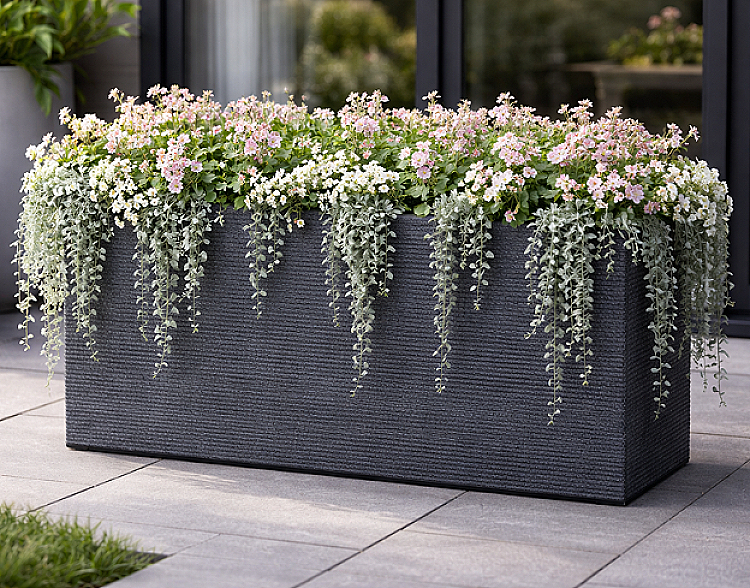
As we settle into the heart of February, the garden world is often caught in a strange, restless energy. We are collectively peering through the frost, waiting for the first sign of green to signal that it’s time to start "doing." But for the intentional gardener, February isn't a month for doing—it is a month for being. It is the perfect window of time to look at your outdoor space and decide to swap the "busy-ness" of seasonal decorating for the lasting balance of architectural design.
The secret to a garden that feels like a sanctuary—one that offers a sense of calm regardless of the month—lies in three elemental pillars: Earth, Steel, and Stone. By grounding your sanctuary in these materials now, you create a foundation that doesn't just wait for the flowers; it thrives without them.
Steel: The Architecture of Order (and its Luminous Counterpart)
In a world of visual clutter, steel is the antidote. It provides the crisp, unapologetic lines that tell the eye where to look, instantly turning a "busy" yard into a balanced landscape.
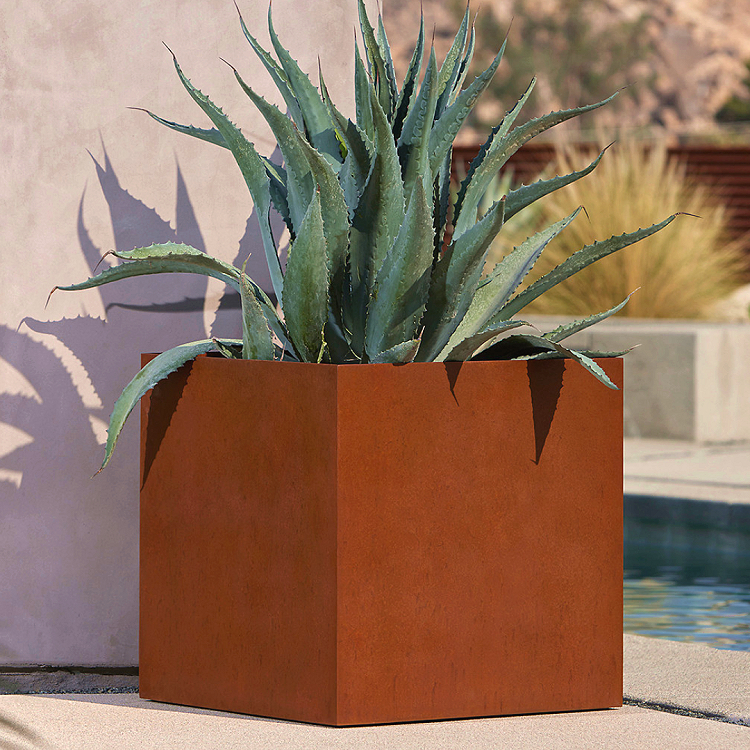
Consider the Modern Corten Steel Planter. This isn't just a container; it is a living piece of architecture. It arrives with a clean, raw gray finish and, over the coming months, matures into a deep, velvety rust patina. This transition is the height of balance—a man-made structure that evolves with the natural environment.
Similarly, the structural weight of wrought iron window boxes acts as a permanent frame for your home. These dark, forged lines provide a sense of "heft" and history, ensuring your windows look anchored and intentional rather than just adorned.
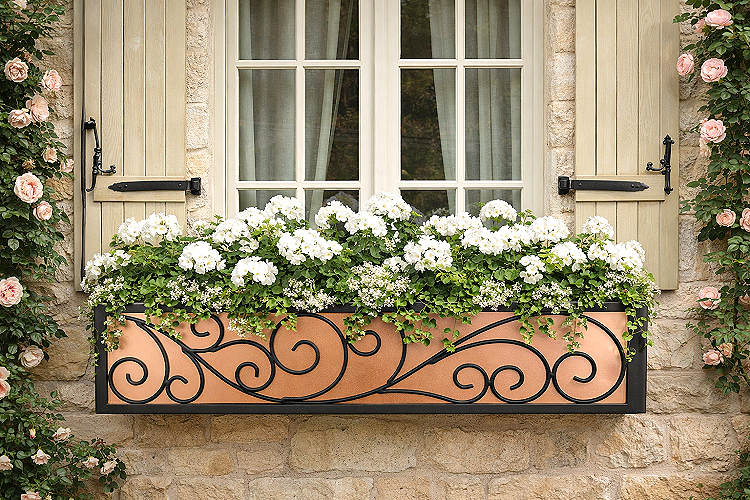
To soften these industrial edges, we often introduce the glow of copper liners within the iron frames. While the iron provides the necessary structural weight, the copper acts as the 'jewelry,' adding a polished, brilliant glint to the overall composition. It reflects the low-angled February sun, providing a luminous warmth that brightens the facade long before the first bulb breaks the soil. As it develops a sophisticated verdigris patina, it bridges the gap between the raw strength of the iron and the refined beauty of the home.
Stone: Texture as an Anchor
If steel provides the lines, stone provides the soul. A balanced garden needs gravity—a sense that it was built to endure. Traditionally, this required heavy masonry, but modern design allows us to achieve that same stone aesthetic through more refined means.
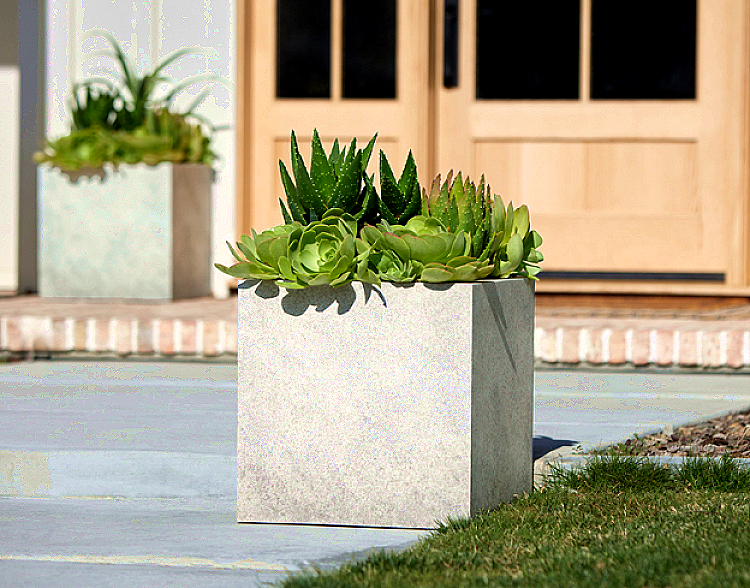
Fiberstone is our material of choice for the designer-focused garden. It captures the gritty, porous, and authentic texture of natural stone, but with the high-performance engineering required for modern living. Using a fiberstone trellis planter allows you to add vertical balance, turning a bare wall into a sculptural focal point or a living privacy screen. It’s about creating "rooms" within your garden—using the weight of stone to define where the world ends and your sanctuary begins.
Earth: The Artisanal Finish
The final element of a balanced garden is a return to the Earth. We move away from the "busy" look of artificial, mass-produced colors by leaning into the nuanced, organic tones found in nature.
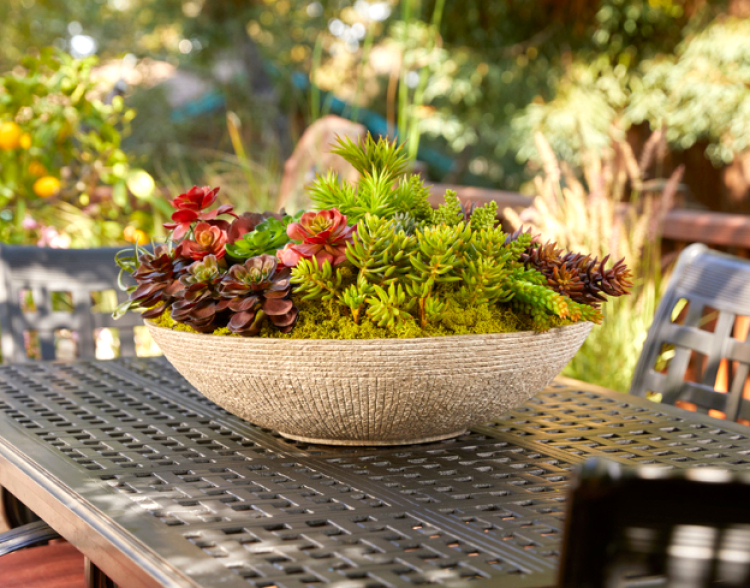
Our collection of organic, earth-toned finishes is applied by hand to mimic the subtle variations of weathered rock and sculpted clay. When your planters share the tonal DNA of the surrounding landscape, the eye relaxes. This tonal harmony is the shortest path to a garden that feels like a sanctuary—a space where the "raw" elements of the environment meet the "refined" vision of the home.
The Balanced Path Forward
Swapping busy for balance means choosing materials that age gracefully rather than those that need constant replacing. It means trusting that a garden grounded in Earth, Steel, and Stone will always be more rewarding than one filled with fleeting trends.
This February, take a breath. Look at the bones of your home. Before the "busy" of spring planting arrives, take the time to anchor your vision in the elements that endure.